Globally prostate cancer is the second most frequently diagnosed cancer and sixth leading cause of cancer death in men. In Ghana, there is an increasing trend in the incidence of prostate cancer.
Learn more about prostate cancer
From anatomy, to diagnosis, treatment and living well beyond it - for patients, their families and extended families, carers and health professionals.

We believe that we can save more life's with you
At Prostate Health Foundation Ghana, we actively raise awareness about men's prostate health by using popular socialmedia platforms like WhatsApp and Tiktok. Through these channels, we share educational content, spark important conversations, and encouragement to prioritize their health. In addition to our digital advocacy, we occasionally organize free health screenings and community outreach programs to give men direct access to vital health services, promoting early detection and proactive care.
Key Facts About Prostate Cancer
Read answers to some frequently asked questions about prostate cancer
Prostate cancer is the second most common cancer diagnosed in Ghanaian men

Overall, 4 in 10 men living in Ghana will have prostate cancer at some point in their lives

There are an estimated 5 thousand plus men living with prostate cancer in Ghana alone

About Us

Empowering ghanaian men through prostate health awareness and making health checks part of their life
The Prostate Health Foundation Ghana is a non-profit organization dedicated to men’s health advocacy, with a special focus on prostate-related conditions. We are committed to breaking the silence surrounding prostate health by raising awareness, educating communities, and promoting early detection through regular screenings and outreach programs.
Risk, Prevention, and Screening
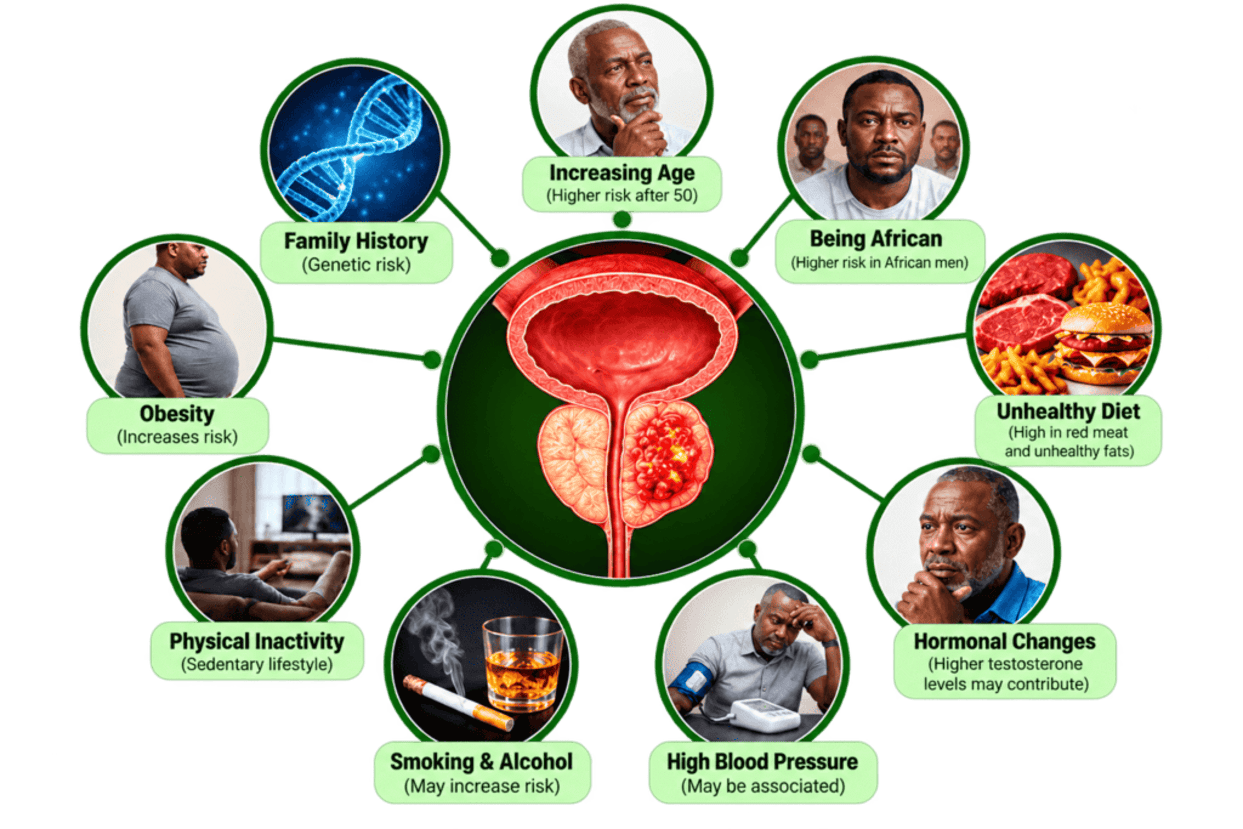
You can help reduce your risk of prostate cancer by making healthy choices like eating right, staying active, and knowing your risk. It's also important to follow recommended screening guidelines, which can help detect prostate cancers early.

Learn about the benefits of good nutrition, regular physical activity, and staying at a healthy weight.

Learn about recommended prostate cancer screening tests and find resources to helop you get ona screening schedules that's right for you.

Supporting Families and Caregivers
A prostate cancer diagnosis affects close family and friends too. Find out what to expect if you become a caregiver for a person with prosate cancer, and get tips for making sure that you take care of yourself as well.
Myths and facts about prostate cancer
MYTHS
FACTS
01. Only old men get prostate cancer.
While it is more common in men over 50, younger men can also develop prostate cancer, though it is less common.
02. Prostate cancer always causes symptoms.
Early prostate cancer often has no symptoms. Regular screening can help detect it early.
03. Having urinary problems means you have prostate cancer.
Many urinary problems are caused by non-cancerous conditions, such as an enlarged prostate or infection. Only proper medical tests can confirm prostate cancer.
04. Prostate cancer is always fatal.
Many men with prostate cancer live long, healthy lives, especially when it is detected and treated early.
05. A vasectomy causes prostate cancer.
Research has found no strong evidence that a vasectomy causes prostate cancer.
06. If no one in your family has prostate cancer, you cannot get it.
Family history increases the risk, but many men diagnosed with prostate cancer have no family history of the disease.
07. Screening always does more harm than good.
Screening has benefits and risks. Men should discuss with their healthcare provider when and whether screening is appropriate based on their age and risk factors.
08. Prostate cancer spreads quickly in all cases.
Some prostate cancers grow very slowly, while others are more aggressive. Treatment depends on the type and stage of the cancer.
09. A healthy lifestyle completely prevents prostate cancer
A healthy diet, regular exercise, and maintaining a healthy weight may reduce risk, but they cannot completely prevent prostate cancer.
10. Treatment always causes permanent impotence or incontinencer.
Some treatments can affect sexual or urinary function, but not every man experience these side effects, and many improve over time with treatment and rehabilitation.
Key Factors to Remember
- The risk increases with age, especially after 50.
- The Prostate risk increases with age, especially after 50.
- Men with a family history or African ancestry may have a higher risk.
- Early detection greatly improves the chances of successful treatment.
- Regular medical check-ups and discussing screening with a healthcare provider are important, particularly for men at higher risk.
Upcoming Events Calendar
Take Action Now
We can't do it without you.
There are so many ways you
can make a difference.